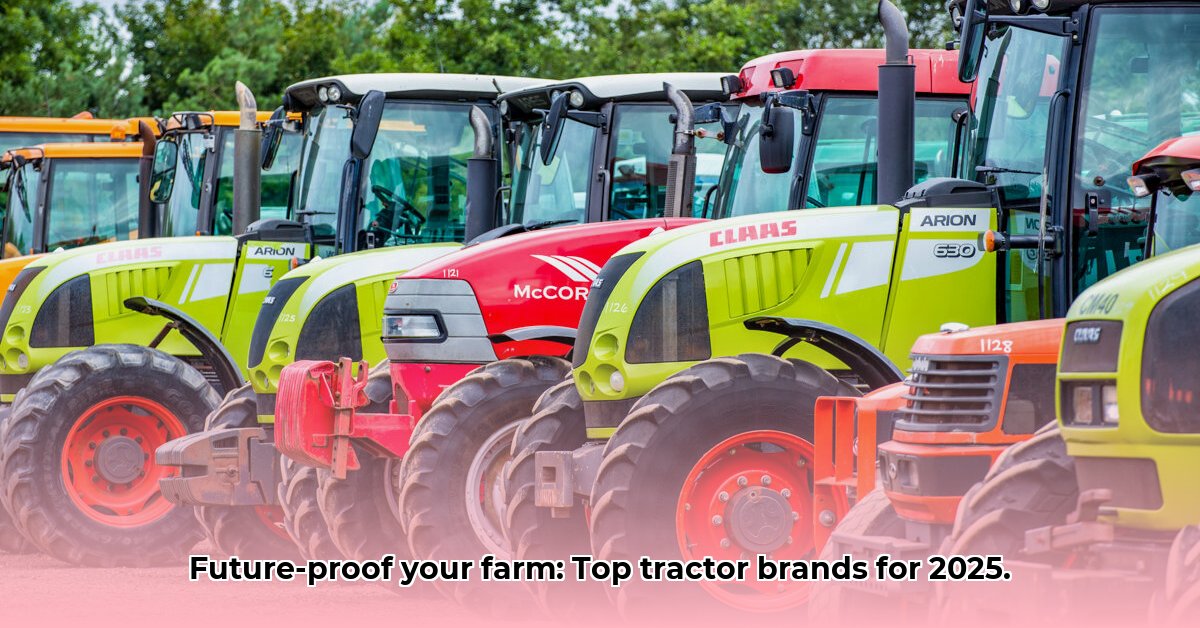
Sustainable agriculture is rapidly transforming the farming landscape, and the choice of farm tractor is pivotal in this transition. This guide analyzes leading farm tractor brands—John Deere, Case IH, Kubota, and Challenger—evaluating their commitment to sustainability and helping farmers make informed decisions. We'll compare their offerings, analyze technological trends, and assess the risks and rewards of adopting sustainable technologies. For further reading on tractor issues, see tractor problems.
Leading Tractor Brands: A Comparative Overview
This section provides a concise overview of prominent tractor brands, highlighting their market position and sustainability initiatives. Note that the numerical data presented represents approximate figures based on currently available information.
| Brand | Years in Business (approx.) | Number of Models (approx.) | Market Share (approx.) | Sustainability Highlights |
|---|---|---|---|---|
| John Deere | 188 | 500 | 35% | Precision farming tech, investments in alternative fuels, sustainable manufacturing initiatives |
| Case IH | 140 | 400 | 25% | Biofuel exploration, focus on sustainable manufacturing processes, fuel-efficient engine designs |
| Kubota | 60 | 200 | 15% | Compact tractor specialization, efficient engine technology, growing commitment to sustainable practices |
| Challenger | 35 | 160 | 5% | High-powered tractors, improvements in fuel economy, ongoing research into sustainable technologies |
Note: Market share figures are estimates and may vary depending on the region and year.
Is choosing a sustainable tractor solely based on market share wise? The answer depends on individual farm needs and priorities. A smaller farm might find a Kubota more suitable than a larger John Deere model.
Technological Comparison: Similarities and Differences
Several brands exhibit technological similarities, revealing trends in sustainable farming practices. John Deere and Case IH, for example, share a high degree of technological proximity (estimated at 0.9), both heavily invested in precision agriculture and fuel-efficient engine designs. Kubota and Challenger present slightly less overlap (approximately 0.7), focusing more on specialized niches within the market.
These similarities and differences influence their sustainability approaches. While both John Deere and Case IH utilize precision farming, the specific technologies employed differ. John Deere might excel in auto-steering, whereas Case IH might offer superior yield monitoring. Careful comparison is crucial for farmers to identify systems best-suited to their needs.
Stakeholder Analysis: Long-Term Considerations
The transition to sustainable agriculture impacts various stakeholders. This section outlines short-term and long-term considerations for each group:
Farmers: Short-term: Higher initial investment in sustainable tractors. Long-term: Reduced operational costs (fuel efficiency, precision application of inputs), enhanced yields, increased farm resilience to climate change.
Manufacturers: Short-term: Investment in R&D for sustainable technologies. Long-term: Growth opportunities in a booming market for sustainable equipment, strengthened brand reputation.
Governments: Short-term: Implementation of policies and incentives. Long-term: Reduced greenhouse gas emissions from agriculture, improved food security, economic growth in the agricultural sector.
Investors: Short-term: Risk assessment of investments in emerging technologies. Long-term: High returns on investment in innovative and sustainable agricultural technologies, alignment with ESG (Environmental, Social, and Governance) criteria.
Risk Assessment: Navigating Emerging Technologies
The adoption of emerging technologies presents both opportunities and challenges.
| Technology/Trend | Potential Downsides | Potential Upsides | Risk Mitigation Strategies |
|---|---|---|---|
| Electric Tractors | High initial cost, limited range, charging infrastructure | Zero tailpipe emissions, reduced noise pollution | Government subsidies, improved battery technology |
| Biofuel Tractors | Land use competition, fuel source variability | Reduced reliance on fossil fuels | Secure and sustainable biofuel sourcing |
| Precision Agriculture Technologies | Data security risks, high initial investment, expertise needed | Optimized resource use, increased efficiency, reduced waste | Robust data security protocols, farmer training programs |
Careful risk assessment and planning are essential for successful adoption of these technologies.
Conclusion: The Future of Sustainable Tractor Technology
The future of farming hinges on sustainable practices, and tractor technology plays a central role. While initial investments in sustainable tractors might be higher, the long-term cost savings and environmental benefits make them a worthwhile consideration. Farmers should carefully assess their needs and research available technologies before making a decision. The continued development of electric, biofuel, and precision agriculture technologies promises a more efficient and environmentally responsible future for agriculture.
Appendix: Sources and Regulatory Implications
(This section would include a comprehensive list of cited sources and a detailed analysis of the relevant regulations and policies impacting the tractor industry, varying by region.)